The city-country has the highest density of millionaires, with over 150,000 in a population of 5 million, making up 3% of residents. |
1001  
|
There are practically no traffic jams in the city. The recipe is very simple—or rather, the calculation is very complex, and you can't explain it on your fingers—but the meaning is clear—the more expensive the car is, the fewer people will buy it. I don't even know if our authorities need to adopt this experience. There are a lot of vehicles on the roads of Singapore, including a lot of ordinary budget cars, but there are almost no traffic jams. |
1001
|
In the city, the number of cars is fixed, and to buy a car, you first need to win a car ownership permit at an auction. This unique system adds a layer of intrigue to the city's lifestyle, making it a fascinating place to explore. |
1001
|
In Singapore, only 15% of the population owns a car. In Europe, this figure is 84%. Therefore, it seems that there are a lot of cars in the city, but in percentage terms, there are very few of them. |
1001
|
Yes, this is a country of fines. There are fines for everything, and their size should scare off all tourists from the government. |
1001
|
Watered the flowers and left water in the saucer - a fine. Did not flush the toilet - a fine. Sing or play a musical instrument and irritate others - a fine. Brought gum into the country - a gigantic fine. Brought a joint of marijuana with you - death. |
1001
|
The country has no resources—no gas, oil, or coal. Singapore imports everything: drinking water, construction sand, oil, gas, electricity, and even labor and talent. |
1001
|
Singapore very often ranks first in the ranking of the most expensive cities in the world—not every year, but once every three years. Well, the fact that it never leaves the top five is not worth writing about. |
1001
|
Singapore is a haven of safety, with practically no crime, beggars, or other downsides of big cities. This peaceful environment is maintained with few police officers on the streets and more robot dogs that monitor social distancing, ensuring a sense of security for all. |
1001
|
Local food is so loved that when meeting people in Singapore, the usual question is not How are you? but Have you eaten today? The best place to get acquainted with Singaporean cuisine is the Hawker Center. This is a huge street food court that looks like a mix of different cuisines, from Chinese to English. |
1001
|
The locals love expensive and pompous restaurants as much as simple food courts. Yes, this is a special kind of weekend pastime: going to another part of the city to visit a trendy place with seafood, mini-cakes, or a buffet. And do not forget to take a selfie during brunch, lunch, or dinner. |
1001
|
Maternity insurance in Singapore is extremely important. It must be taken out a year before the expected pregnancy. You will pay for at least two years of insurance, so the amount will be appropriate. |
1001
|
In addition to ethnic quarters and the main attractions of Singapore, the must-visit list includes secret bars. These are hidden gems that offer unique experiences, such as the three-story Marquee club with a Ferris wheel and a pipe instead of an elevator, adding a touch of mystery and excitement to the city's nightlife. |
1001
|
If you buy an apartment here, this is not a reason to relax regarding a visa. Buying real estate does not give the right to obtain an expensive work visa. What can I say? Only 10% of residents have permanent residence. |
1001
|
On average, about 170 rainy days are recorded in Singapore per year, the highest rate in the world. |
1001
|
Jewel Changi Airport in Singapore is more reminiscent of a Botanical Garden than a gathering place for travelers—thousands of trees, paths, waterfalls from rainwater, and secluded areas for relaxation. The main feature is the steel and glass facade, shaped like a dome. Art objects, a suspension bridge, mirror mazes, and much entertainment – as a matter of course. |
1001
|
The city has repeatedly been ranked among the most environmentally friendly cities in the world. And here's why: A third of the city is surrounded by greenery, and the number of parks, squares, and natural recreation areas amazes tourists. Add to this the walled gardens, green buildings, plants, and flowers on the roofs—a fairytale garden! |
1001
|
The city's fines system is severe. You can be held accountable for chewing gum in the wrong place, spitting on the ground, smoking, throwing garbage, and eating on public transport. And this is just the tip of the iceberg of fines. |
1000
|
Even the authorities of Singapore are pushing citizens to choose a healthy lifestyle. Hookahs, snuff, and electronic cigarettes are prohibited. Alcohol can be purchased strictly until 10:30 pm, including sweets that contain alcohol. |
1000
|
In addition to giving up bad habits, Singapore constantly talks about the importance of sports. The city's dedication to health and fitness, with special areas in almost every district with free exercise machines, is truly inspiring and motivates one to adopt a healthier lifestyle. |
1000
|
The local people love traditional cuisine and 'clean' and healthy food. If you buy products from the 'Healthy Lifestyle' category, you get points in a unique application. These products are carefully curated to promote a healthy lifestyle, and the points can be spent during your next snack. But only a healthy one. |
1000
|
Singaporeans even use a special 'material' abbreviation: the Five Cs of Singapore. It includes cash, a car, a credit card, a private house with all amenities (condominium), and membership in a prestigious club (club membership). These are considered the five key indicators of success and prosperity in Singaporean society. |
1000
|
Although a personal car is an indicator of a Singaporean's success, there are relatively few cars in the city. There are reasons for this: the high cost and difficulty of obtaining a license, traffic jams, and a well-developed public transport system. |
1000
|
|
1000
|
The state has an equatorial climate. It is always hot and humid. The air temperature fluctuates around +25-30?C all year round, and the humidity is 82-86%. |
1000
|
Singapore's equatorial location means strong sun exposure, making sunburn possible even on cloudy days. Always protect your skin! |
1000
|
The city of Singapore City is in the south of the island. 15 km to the west is the urban-type settlement of Jurong, which just 25 years ago was a fishing village with only a thousand residents. Today, it is a large industrial center. Modern residential areas are scattered throughout the island. |
1000
|
Along with Monaco, Singapore is the most densely populated country in the world, with a population density of more than 6,500 people per square kilometer. |
1000
|
Indians, Pakistanis, and others work as migrant workers here. |
1000
|
The indicator by which Singapore is a leader is the health of its residents. According to the American financial and economic information agency Bloomberg (The World's Healthiest Countries 2012), the health of Singapore residents is the best in the world. At the same time, according to the overall quality of life index, the country is in 11th place. |
1000
|



 Share
Share

 PNG
PNG  PNG
PNG 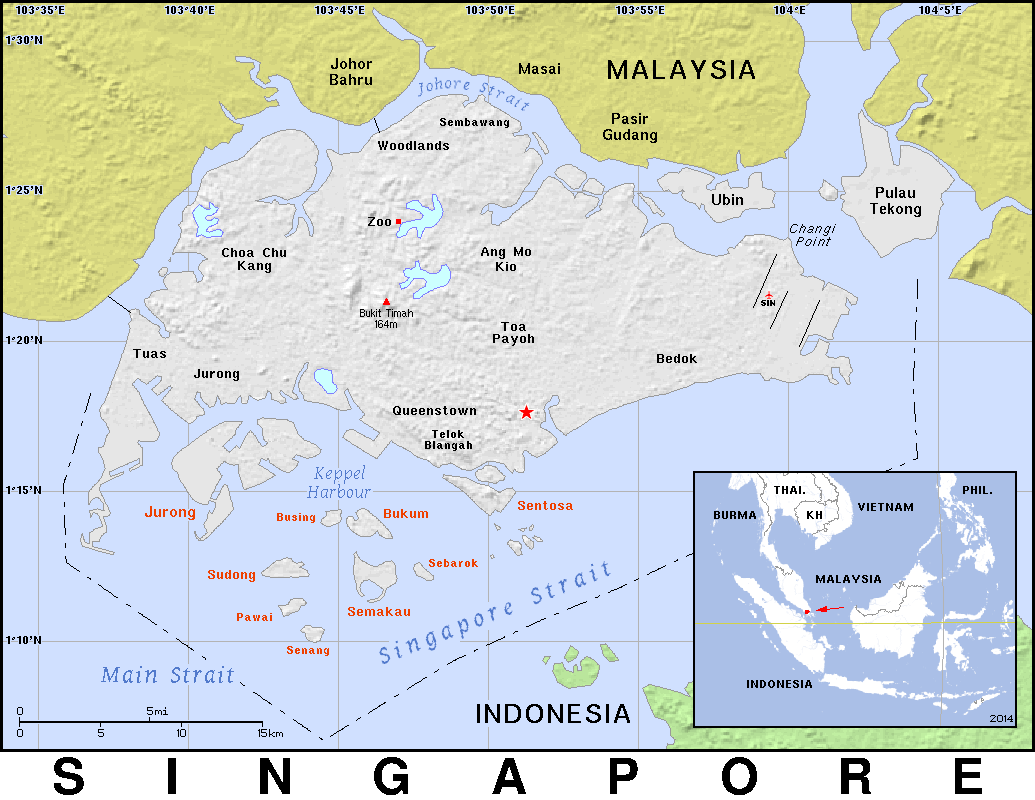 GIF
GIF  ZIP (TXT)