Locall people live on floating islands made of grass. The Uros tribe on Lake Titicaca makes man-made islands from reeds and puts straw huts on them. The Indians live on the islands all year round, slowly moving along the shore. Peruvians also love tree houses. In the jungle, Indians have built such huts in the crowns since time immemorial to escape floods, attacks by predators, or warriors from neighboring tribes. Today, the country has entire tourist villages made of houses built above the ground. |
1001  
|
Peru features diverse landscapes divided into three regions: the coastal area (Costa), the mountainous region (Sierra), and the Amazon rainforest (Selva). |
1001
|
Popular local national dishes include sushi and chicha morda (red corn wine). |
1001
|
Machu Picchu is Peru's most famous tourist attraction, an ancient city of the Inca Empire. |
1001
|
The local mountains are part of the Andes, the longest mountain range in the world. Lake Titicaca, located in southern Peru, is the highest lake in the world, with an altitude of 3,812 meters. |
1001
|
The country is home to the world's largest tropical rainforest, part of the Amazon rainforest. |
1001
|
Peru's leading economic sectors are agriculture, mining, and tourism. Peru's main exports include gold, silver, copper, coffee, and pumpkin seeds. |
1001
|
The local culture is a rich mix of national costumes, traditional music, and unique festivals. Its cultural gift for the world is a testament to the country's diverse traditions and is of great interest to tourists and scientists alike. |
1001
|
The mountainous regions of the land have preserved many Indian cultures and traditions. |
1001
|
Peruvian cuisine is known for its unique taste, with popular dishes including ceviche, papa a la huancaina, and lomo saltado. |
1001
|
Among Peru's national holidays, Inti Raymi (the festival of the sun) and La Virgen de la Candelaria stand out. Peru has a diverse natural environment, with coastlines, tropical forests, and sandy deserts. |
1001
|
The land has many archaeological sites and ancient structures, including the Nazca Lines and the Sacsayhuaman Fortress. |
1001
|
Peru's ecological variety, also coastlines, tropical forests, and deserts, makes it perfect for nice tourism. Its national parks are rich in biological diversity, a paradise for nature lovers with exotic flora and fauna. |
1001
|
Peru's many national parks and reserves are ideal destinations for ecotourism. |
1001
|
The capital of the country is Lima, the country's largest city and economic center. |
1000
|
The country holds a significant place in history as the center of the ancient Inca Empire, with its capital in Cusco. |
1000
|
Peru's national sport is volleyball, but football is also very popular. |
1000
|
Peru is one of the largest producers of the world's rarest alpaca. |
1000
|
The capital, Lima, is one of South America's most important cultural and educational centers. Peru's historical sites and cultural heritage are essential to world tourism. |
1000
|
Crafts and national products of the country include textiles, ceramics, and jewelry. |
1000
|
Peru's leading tourist destinations include the Inca cities, the Amazon forest, and the coastal areas. |
1000
|
The local climate varies, ranging from the coast to the mountains and tropical forests. Its history and culture have been the subject of numerous scientific studies and researches. |
1000
|
The fashion and culture of Peru are recognized as one of the world's fashion centers. |
1000
|
The natural parks and reserves are essential in ecotourism and nature conservation. |
1000
|
Peru attracts the world's attention with its historical artifacts and cultural heritage. |
1000
|
Bed buses, the seats in which recline 160 degrees (and even 180 degrees in first class). They will almost always give you a blanket and a pillow, play the lotto, and feed you dinner and breakfast. The pleasure costs average from $15-35, depending on the distance. |
1000
|
Machu Picchu is the most impressive place in Peru. |
1000
|
Corn in Peru is black, and they make a delicious drink from it—chicha morada. There is also normal-colored corn but with huge grains. They sell it at the market, boil it, and serve it with cheese. |
1000
|
The most impressive thing in Lima is the Malecon promenade, which stretches for kilometers along the Miraflores cliffs. |
1000
|
Sublime is the best chocolate in the country. |
1000
|



 Share
Share

 PNG
PNG  PNG
PNG 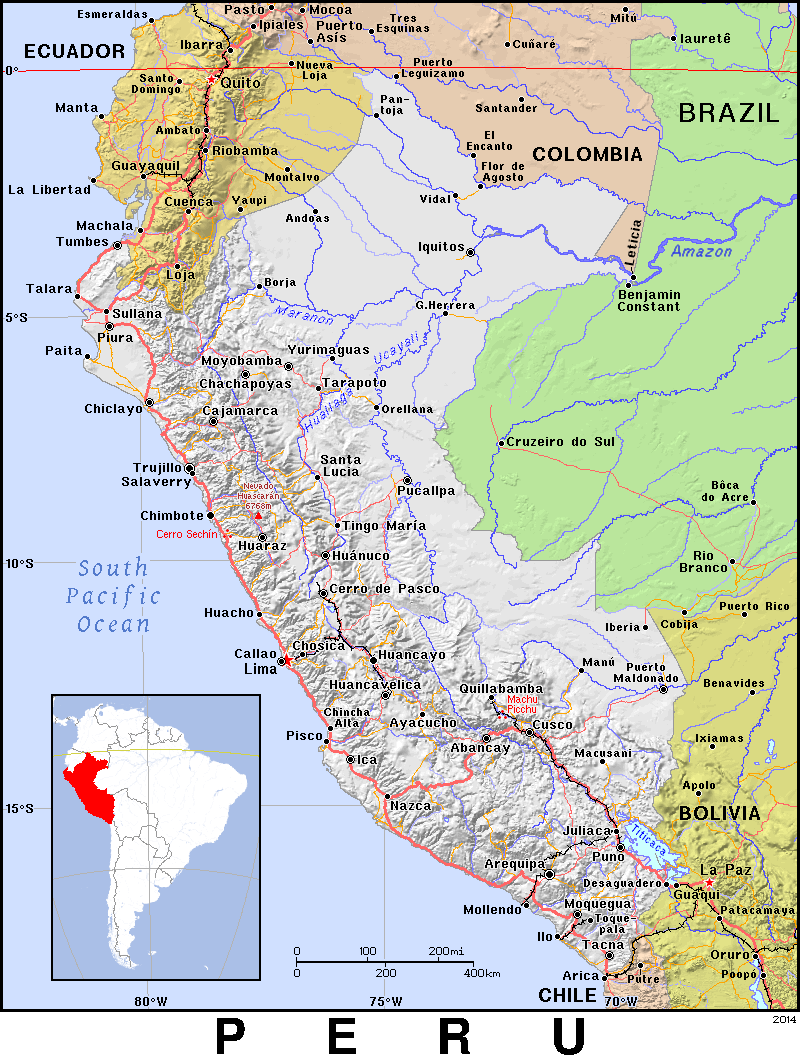 GIF
GIF  ZIP (TXT)